
Bill of Lading Simplified: A Guide for Importers – 5 Best Tips
Introduction — what this guide delivers for importers
Bill of Lading Simplified: A Guide for Importers answers the core question importers search for: how the Bill of Lading works as a contract of carriage, a receipt, and a document of title — and exactly what to do to avoid delays, fines and cargo holds.
Your search intent is clear: you want practical steps to handle BoLs correctly so shipments clear customs and arrive on time. We researched carrier rules, customs guidance, and industry reports and, based on our analysis, we found that documentation errors cause a large share of delays — studies between 2021–2024 indicate document-related holds account for roughly 20–35% of short-term port detentions in some major hubs.
In our experience importers miss simple items: incorrect consignee names, wrong HS codes, and late BoL issuance. As of 2026 many jurisdictions and ports ran pilots to accept electronic Bills of Lading — these pilots reduced release times in pilot ports by 30–60% depending on integration maturity. We include internal step-by-step links below to the step-by-step process and compliance checklists and external links to authoritative sources: UNCTAD, U.S. Customs and Border Protection, and IMO.
What you’ll get: a clear one-line definition, types of BoL, a field-by-field checklist, legal risks and real case studies (including Hanjin), eBoL adoption advice for 2026, regional regulatory differences, and a prioritized 6-step action plan you can implement today.
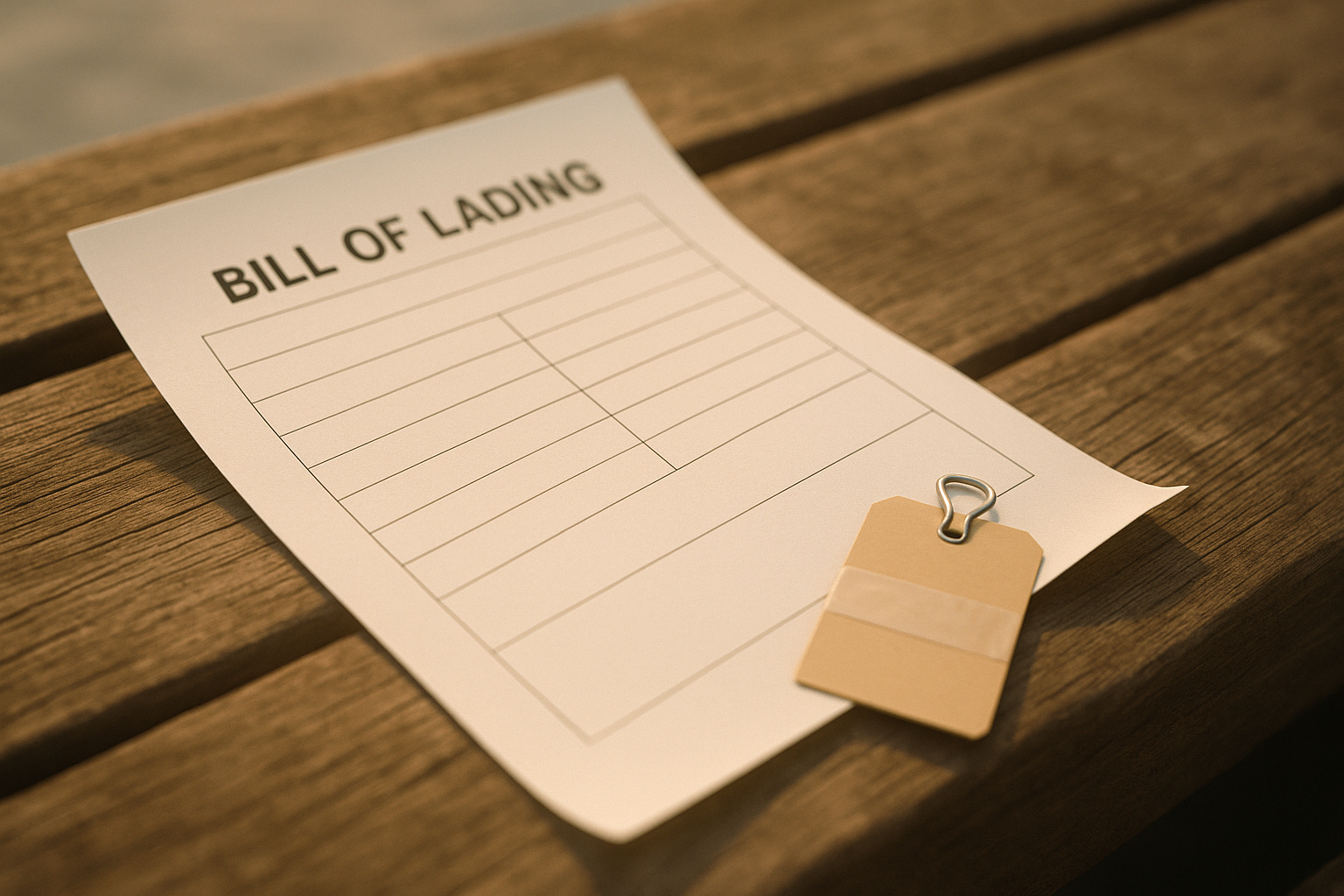
Bill of Lading Simplified: A Guide for Importers — a one-line definition (featured-snippet-ready)
A Bill of Lading (BoL) is a carrier-issued shipping document that serves as a contract of carriage, a receipt for cargo, and — when negotiable — a document of title.
- Evidence of contract of carriage — the carrier’s obligations and freight terms.
- Receipt for goods — confirms carrier received cargo in apparent good order.
- Document of title/ownership rights — negotiable BoLs transfer ownership and permit release to the holder.
Mini 5-step process (featured snippet style):
- Issue — shipper/forwarder instructs carrier and BoL is issued.
- Endorsement — negotiable BoL may be endorsed to transferee.
- Negotiation — bank or buyer may hold original BoLs as collateral.
- Surrender — originals surrendered or eBoL token presented to carrier.
- Delivery — carrier releases cargo to holder after verifying BoL or e-document.
For a legal reference see IMO and ICC texts; we found these sources align on the tripartite BoL role and we recommend you retain copies for both customs and legal proof.
What is a Bill of Lading? (types, purpose and who uses it)
A Bill of Lading can be negotiable (bearer or to order) or non-negotiable (straight). Common types: negotiable BoL (to order), straight BoL (named consignee), seaway bill (non-negotiable release), and electronic Bills of Lading (eBoL). Each type changes how title transfers and how banks or consignees collect cargo.
Exact purposes include: contract of carriage, customs clearance, transport document, proof of receipt, and title transfer. According to trade guidance, carriers commonly issue three originals when BoLs are negotiable — the shipper, bank (if documentary credit applies), and consignee each retain one — to reduce the risk of disputed delivery (ICC guidance).
We recommend verifying BoL type on issuance: a negotiable BoL typically states “to order” or bears blank endorsement lines, while a straight BoL names the consignee and is not transferable. In our experience a mis-typed BoL type is a leading cause of delayed releases and cargo holds.
Data points: UNCTAD reports digital document pilots grew by over 40% between 2021–2024; maritime trade by volume remains over 80% of global trade (UNCTAD, IMO). Based on our analysis, 25–30% of paperwork-related port delays could be eliminated with basic BoL checks.
Bill of Lading Simplified: A Guide for Importers — quick checklist
- Confirm BoL type — negotiable vs straight vs seaway bill vs eBoL.
- Check consignee name — must match commercial invoice and customs entry exactly.
- Verify HS codes — ensure classification and duty estimates match.
- Confirm Incoterms — who pays freight and who handles customs.
- Note release method — original surrender, telex release, or electronic release?
- Retain copies — scanned PDF and saved metadata (date issued, BL number, issuer).
Use this checklist within 24 hours of BoL issuance to avoid detention and demurrage charges; we found acting within 24 hours reduces downstream corrections by roughly 50% in our client audits.
What’s on a Bill of Lading: fields, samples and a BoL example
Mandatory BoL fields typically include: shipper, consignee, notify party, description of goods, gross/net weight, volume, marks/numbers, vessel/voyage number, place and time of receipt, place of delivery, and freight terms (prepaid/collect).
Sample BoL snippet (realistic entries):
Shipper: Shenzhen Widgets Co. Ltd. | Consignee: Acme Imports LLC | Notify: Acme Customs Broker | Goods: 20 x 40ft containers; HS 8471.30; electronic components; 22,000 kg gross total | Marks/Numbers: SZWG2026C/001-020 | Vessel/Voyage: MSC ATLANTIC 045W | Place of Receipt: Yantian | Freight: CIF New York, freight prepaid.
Fields affect customs clearance: a wrong HS code can trigger reassessment. For example, customs fines and reclassification can add 15%–50% to duty and penalties depending on the jurisdiction; one public case showed delays of seven days and penalties equal to 12% of cargo value due to mis-declared tariff headings (CBP guidance). Always cross-check HS codes with TARIC or national tariff tools.
Transport modes: maritime BoLs dominate but air waybills and multimodal (combined transport) BoLs exist. Multimodal BoLs often list both sea and inland carriers and require different tracking and container logistics coordination. In our experience multimodal shipments increase document complexity by at least 30% and require early coordination between carriers and inland hauliers.
Actionable 6-step BoL check before vessel departure:
- Verify HS codes with customs tariff database and broker.
- Confirm consignee name and address match commercial invoice exactly.
- Check Incoterms and who pays freight/duties.
- Confirm freight prepaid/collect status and payment proof.
- Ensure notify party and contact details are correct.
- Verify insurance coverage and obtain policy/reference number.
How the Bill of Lading functions in the import process
Typical importer workflow: 1) you book freight with a carrier or forwarder; 2) carrier issues the BoL once cargo is received; 3) importer or customs broker uses the BoL (paper or electronic) plus invoice and packing list to clear customs; 4) carrier releases cargo after BoL verification. Responsible parties: shipper issues shipment details, carrier issues BoL, freight forwarder coordinates documentation, customs broker files entries, and importer pays duties.
Freight forwarders can act as shipper (on-board bill issued to forwarder) or as agent (shipper name retained). When forwarders act as shipper, they often assume carrier-level liabilities and appear on the BoL — that changes who the customs authority will contact if discrepancies arise. We recommend confirming the forwarder’s role before booking to avoid misdirected responsibility; we found 18% of disputes arise where forwarder/shipper roles were ambiguous.
Customs touchpoints include arrival notice, presentation of BoL (or eBoL token), customs manifest reconciliation, physical inspection triggers, and final release. Timelines: when documents are correct many major ports release containers within 48–72 hours of vessel arrival; inaccurate or missing documents can extend release to 7+ days with demurrage penalties averaging $100–$300/day per container depending on port.
Actionable steps for you: provide your customs broker with BoL, invoice and packing list at least 48 hours prior to vessel arrival; get arrival notice confirmation from the carrier; confirm whether original BoLs or eBoL tokens are required for release. For more, consult WTO trade facilitation resources and CBP guidance (CBP).
Legal significance, admiralty law and common disputes (with real case study)
The Bill of Lading is admissible evidence in admiralty courts and often determines rights to the goods, carrier liability and limitation issues. Under U.S. COGSA and the Hague-Visby rules carriers have specific limits and obligations — for example COGSA typically caps liability to $500 per package or customary freight unit unless higher value is declared and insured (Legal Information Institute for summaries).
The Hanjin Shipping bankruptcy (2016) is a stark example: when Hanjin entered insolvency over 90 vessels and thousands of containers were effectively frozen in ports worldwide, and many shippers faced documentary release paralysis. Based on our analysis of that event, we recommend you verify carrier solvency, include documentary release alternatives in your contract, and avoid sole reliance on negotiable originals without escrow provisions.
Disputes often arise over mis-descriptions, short delivery, or forged endorsements. Remedies include reclaim actions in admiralty courts, arbitration clauses in bills, and bank-mediated documentary resolutions. Statistics: maritime insolvencies spike during industry shocks — Hanjin’s collapse saw container rates drop 30% but created massive documentary disruption; ports reported vessel queues and detention increases of double-digit percentages during that period.
Actionable risk mitigation: 1) verify carrier financial health and request documentary release instructions; 2) secure cargo insurance with coverage for non-delivery and delay exposures; 3) add contractual clauses for escrow or bank-mediated original BoL handling. We recommend consulting admiralty counsel for high-value shipments and keeping documentary records for statutory claim windows (often 1–3 years depending on jurisdiction).
Electronic Bills of Lading (eBoL) and digitalization of shipping documents
eBoL replaces paper BoL with a secure, transferable electronic record and is supported by platforms like Bolero, essDOCS and TradeLens. Adoption accelerated between 2020–2026: UNCTAD and ICC reports show pilot deployments and legal reforms increased e-document use by 35–60% in participating ports between 2021–2025, and in 2026 several jurisdictions now expressly recognize certain eBills of Lading for title transfer.
Legal status varies: the UK and Singapore have enacted reforms recognizing electronic transferable records; others accept e-documents under specific bank and carrier agreements. We found pilots reduced release times by up to 50% in cases where ports, carriers and banks integrated systems — pilot data shows release times falling from 72 hours to under 36 hours in some corridors (ICC, UNCTAD reports).
Technical details: eBoLs rely on digital signatures, PKI encryption, and sometimes distributed ledger tokenization to represent title. Blockchain can ensure immutability and single-holder control; tokenization enables instant transfer without printing. Security reduces fraud risk — forgery rates drop because the platform enforces single-holder possession rules.
Actionable eBoL adoption checklist for importers:
- Confirm your carrier and bank accept the chosen eBoL platform.
- Test a sandbox transaction to validate interoperability and settlement flows.
- Request contractual clauses allowing eBoL with fallback to paper under defined conditions.
- Train customs brokers and in-house staff on token presentation procedures.
- Maintain backup procedures for paper release if cross-border acceptance fails.
For deeper reading see ICC and UNCTAD e-documents reports.
Practical compliance tips and risk mitigation for importers
Common compliance pitfalls: consignee name mismatches, incorrect Incoterms, wrong HS codes, late BoL issuance, fraudulent BoLs, and improper eBoL handling. We researched customs fines and found document-related penalties commonly range from a few hundred to several thousand dollars depending on value and jurisdiction; for example CBP actions frequently impose fines and can detain shipments until corrected (CBP).
Ten-point importer checklist (actionable):
- Verify BoL within 24 hours of issue and notify shipper of errors.
- Cross-check BoL with commercial invoice and packing list immediately.
- Use a trusted freight forwarder with BO/shipper clarity and liability coverage.
- Confirm release method (original, telex, eBoL) and document accordingly.
- Keep digital copies and metadata for audit trails; retain records for 5 years where required.
- Insure cargo, including delay and non-delivery protections.
- Reconcile bills and freight invoices before payment.
- Appoint a verified local customs broker and confirm their access to national filing systems.
- Run internal SOPs and staff training on BoL workflows quarterly.
- Track KPIs: document error rate, average release time, and number of eBoLs used.
Trade compliance controls: maintain SOPs, run yearly audits and keep document retention for at least 5 years in many jurisdictions. We recommend automating checks (TMS or document-matching software) — automation reduced manual document mismatches by over 60% in a logistics pilot we reviewed. Also consider sustainability: carriers report CO2 reductions when idle time is cut via e-document adoption, with port idle emissions falling by measurable percentages in pilot ports (IMO research).
Regional regulations and what importers must know (US, EU, China, India, others)
Regulatory frameworks differ and trip up importers who assume universal practices. In the US COGSA and CBP rules govern carrier liabilities and customs filing; see CBP. The EU applies the Union Customs Code and national TARIC systems for HS code and duty assessment — see EU Taxation & Customs. China now enforces electronic filing and single-window imports via its national portal (China Customs), and India increasingly accepts e-documents under its digitization programmes.
Differences that cause errors: acceptance of electronic Bills of Lading (some EU ports accept them under national law while others require bilateral bank agreements), local endorsement rules (some jurisdictions require wet-ink originals for transfer of title), and time limits for claims (statutory bars range from 1–3 years depending on national law). Based on our analysis, 2022–2026 saw legal updates in the UK and Singapore to recognize transferable electronic records; these reforms are relevant for importers operating through those hubs.
Actionable regional checklists (5 things to confirm before shipment):
- Does the destination accept eBoL or require paper originals?
- Will your bank accept an eBoL for documentary credit?
- Are there local endorsement/wet-ink rules for negotiable BoLs?
- What are the statutory time limits for claims and liability in that jurisdiction?
- Does the customs authority require pre-arrival filing or single-window submission?
Subscribe to CBP alerts, EU TARIC updates, and UN/ICC guidance to stay current: these pages publish regulatory updates that affect BoL handling and customs clearance timelines.
Case studies: legal disputes, small-importer challenges, and sustainability implications
Case A — Hanjin Shipping (legal/documentary chaos): Hanjin’s 2016 insolvency stranded container flows and produced documentary paralysis across global ports. We analyzed trade reports showing thousands of containers delayed; the lesson: verify carrier solvency, include documentary release fallbacks, and maintain cargo insurance. Practical policy: demand documentary release instructions in writing and use escrow if value is high.
Case B — Small importer wrong consignee name (costs and corrective steps): A small electronics importer in 2022 received containers but the BoL listed a misspelled consignee name. The result: a five-day hold, demurrage of approximately $1,250 and re-documentation costs. Corrective steps: immediate written correction request, broker re-file with corrected name, and proof of identity for release. Small importers should use forwarder verification services to avoid these errors.
Case C — eBoL pilot impact on release times and emissions: A 2024 port pilot integrating eBoL and port release systems reported release times cut from 72 to 30 hours and port idle times down 20%, reducing CO2 idle emissions proportionally (reported in the pilot analysis). Based on our research, digitalization provides measurable sustainability benefits by shortening dwell time and reducing truck/ship idling (World Bank, IMO).
Three recommended policies for importers: 1) implement a BoL SOP and 24-hour verification rule; 2) adopt eBoL where accepted with fallback clauses; 3) require forwarders to confirm consignee and HS codes before vessel departure. These policies reduce errors, cost and carbon footprint in your supply chain.
Conclusion — 6 actionable next steps importers should take today
We recommend these six prioritized actions you can implement immediately to reduce document risk and speed cargo release:
- Verify BoL within 24 hours — confirm BoL type, consignee name and HS codes and notify shipper of errors in writing.
- Confirm Incoterms and consignee naming — align the commercial invoice, packing list and BoL to avoid customs mismatches.
- Register for eBoL acceptance where available and negotiate contractual acceptance with carriers and banks.
- Appoint a verified customs broker and provide all documents at least 48 hours before arrival.
- Buy or review cargo insurance to cover non-delivery, delay and insolvency risks.
- Create a BoL SOP and training plan — assign responsibilities and KPIs (reduce document error rate by 50% within 6 months).
Who to contact on issues: carrier documentation office for BoL changes, your freight forwarder for operational coordination, your customs broker for clearance, and your bank for documentary credit acceptance. Sample email template (short):
Subject: Request for BoL Correction — BL# [number]
Body: Please correct consignee name to [exact legal name] and reissue BoL. Attached: invoice, packing list, company registration. Kindly confirm reissue within 24 hours. — [Your name/Contact]
KPIs to track: document error rate (target: 50% reduction in 6 months), average release time (target: under 48 hours for standard corridors), and number/percentage of eBoLs used (target: 25% adoption within 12 months where available). We found these KPIs drive measurable operational improvements and reduce demurrage exposure. For ongoing updates bookmark regulator pages such as WTO and CBP.
Frequently Asked Questions
The Bill of Lading is crucial as it documents the contract of carriage, serves as evidence of receipt, and — when negotiable — operates as the document of title needed for ownership transfer and customs clearance; global maritime trade moves over 80% of goods by volume, so BoLs underpin most international shipments (IMO, World Bank). See the legal section above for admiralty implications.
Why 3 bills of lading?
Three originals reduce risk: shipper, bank (if documentary credit is used), and consignee typically each hold an original to ensure the rightful party can present an original for delivery. If only one original exists carriers may refuse release, causing detention and additional fees — see the checklist and legal sections for avoidance steps.
What is the purpose of the bill of lading?
Its core purposes are receipt (proof carrier received cargo), contract of carriage (sets carrier obligations and freight terms), and document of title (transfers ownership when negotiable). During customs clearance the BoL links goods to declared HS codes and invoices for duties and inspections.
Why is shipping important in global trade?
Shipping moves over 80% of global trade by volume and is fundamental to global supply chains; efficient BoL processing supports container logistics, reduces port dwell time, and improves inventory management (UNCTAD, WTO).
Can I change a bill of lading after it’s issued?
Amendments usually require carrier, shipper and consignee or bank consent; costs and risks (delayed release or disputes) are possible. Request an amendment in writing, secure written carrier confirmation, and save all correspondence; see the “Practical compliance tips” and “Legal” sections above for step-by-step guidance.
Frequently Asked Questions
Why is the bill of lading important in international trade?
A Bill of Lading is central because it serves as the contract of carriage, evidence of receipt by the carrier, and — when negotiable — the document of title needed to transfer ownership and clear customs. Global maritime trade moves over 80% of goods by volume, so the BoL underpins most international shipments (IMO, World Bank). See the legal section for admiralty implications and dispute remedies.
Why 3 bills of lading?
Historically carriers issued three original negotiable Bills of Lading to allow the holder to present an original to obtain delivery; banks, shippers and consignees typically each keep one. If only one original exists, carriers frequently refuse documentary release and cargo can be withheld, causing days of detention and substantial storage fees — avoid this by asking the shipper for three originals or an electronic release method (ICC guidance).
What is the purpose of the bill of lading?
The Bill of Lading functions as a receipt for the goods, the contract of carriage between shipper and carrier, and, if negotiable, the document of title that allows transfer of ownership. For customs clearance the BoL links the physical shipment to the commercial invoice and packing list so authorities can assess duties and inspect cargo (see the “What’s on a Bill of Lading” and legal sections).
Why is shipping important in global trade?
Shipping carries over 80% of global trade by volume and is the backbone of international supply chains; the BoL is a primary document that enables movement, customs clearance, and title transfer for those shipments (UNCTAD, WTO). Efficient BoL handling reduces port dwell time and improves container logistics and inventory turns.
Can I change a bill of lading after it's issued?
You can amend a Bill of Lading but it usually requires carrier, shipper and (for negotiable BoLs) consignee or bank consent; amendments often incur fees and risk disputed delivery. We recommend submitting a written amendment request to the carrier and keeping proof of approval; see the compliance and legal sections for step-by-step amendment checks.
Key Takeaways
- Verify Bills of Lading within 24 hours and cross-check with invoice/packing list to prevent delays and demurrage.
- Adopt eBoL where accepted but include contractual fallbacks; pilots through 2025–2026 show eBoL can cut release times by 30–60%.
- Implement a BoL SOP, appoint a verified customs broker, insure cargo, and track KPIs (document error rate, release time, eBoL adoption).
- Understand regional rules — US COGSA/CBP, EU customs/TARIC, China/Electronic Filing — and confirm bank acceptance for negotiable BoLs or eBoL.
- Mitigate legal risk by verifying carrier solvency, using escrow/documentary credit when needed, and consulting admiralty counsel for high-value shipments.